
Hot flashes, broken sleep, mood swings, brain fog, weight that creeps up no matter what you do - these are not character flaws, and they are not something you simply have to live with. They are usually signs of hormone imbalance, and they often respond to treatment when that treatment starts with proper testing. Bioidentical hormone replacement therapy (BHRT) uses estrogen, progesterone, and, when needed, testosterone that are identical in molecular structure to the hormones your ovaries produce - restoring levels your body recognizes and knows how to use.
Dr. Rob Dramov, NMD has spent more than 23 years helping women untangle hormone symptoms that other providers dismissed or treated with guesswork. His approach is simple to state and rigorous in practice: test thoroughly, treat precisely, and keep monitoring as your body responds. Women visit us at both of our clinics — one in Arizona, one in Oregon.
Signs You May Benefit From BHRT
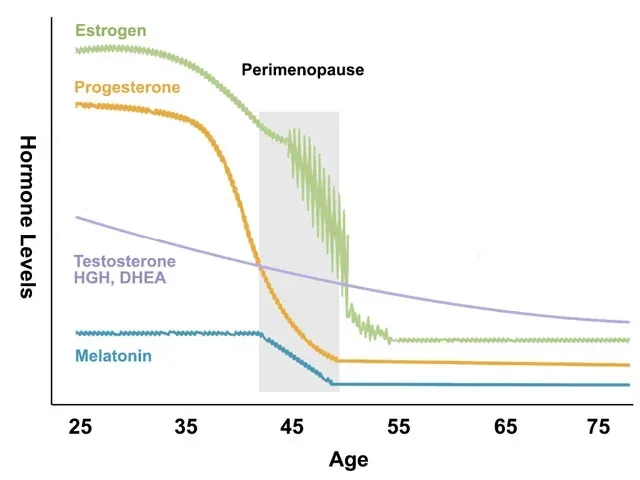
Hormones influence nearly every system in the body - temperature regulation, metabolism, sleep, mood, and sexual function. When levels decline or shift out of balance, symptoms rarely arrive one at a time. If several of the following sound familiar, comprehensive hormone testing is a sensible next step.
- Hot flashes and night sweats — Sudden waves of heat and drenching night sweats are among the most recognizable signs of declining estrogen during perimenopause and menopause.
- Broken, unrefreshing sleep — Waking at 2 or 3 a.m., or sleeping a full night and still waking tired, often traces back to shifting estrogen and progesterone levels.
- Mood changes and anxiety — Irritability, tearfulness, or anxiety that feels out of proportion to your circumstances frequently has a hormonal driver - you are not imagining it.
- Weight gain and slowing metabolism — Weight that accumulates around the midsection despite unchanged eating and exercise habits often reflects hormone and thyroid changes, not a lack of discipline.
- Low libido and vaginal dryness — Declining estrogen and testosterone can reduce desire, arousal, and comfort - symptoms many women are never asked about but that often respond well to treatment.
- Brain fog — Trouble finding words, losing your train of thought, or struggling to concentrate is a frequently reported and very real hormonal symptom.
- Irregular or changing periods — Cycles that shorten, lengthen, or become unpredictable are often the first sign of perimenopause, sometimes years before other symptoms appear.
How BHRT for Women Works
BHRT is not a single product. It is a physician-supervised approach to restoring the hormones your body is no longer producing in adequate amounts, using compounds your body cannot distinguish from its own.
Hormones Identical to Your Own
Bioidentical estrogen and progesterone - and testosterone, when testing shows you need it - match the molecular structure of the hormones produced by your ovaries. Because the structure is identical, they bind to the same receptors and follow the same pathways as your natural hormones. For many women with symptomatic hormone decline, hormone therapy is a safe and effective option when dosing is individualized through proper testing and monitored over time - which is exactly how we practice.
| Bioidentical hormones | Conventional synthetic hormones | |
|---|---|---|
| Molecular structure | Identical to the hormones your ovaries produce | Altered structure; not identical to human hormones |
| Typical source | Plant-derived, then compounded or manufactured to an FDA-approved form | Manufactured; some conjugated oestrogens are animal-derived |
| Dosing | Set from your lab results and adjusted on retest | Standard fixed doses |
| FDA status | Both exist: FDA-approved bioidentical products, and compounded preparations that are not FDA-approved | FDA-approved |
| Monitoring | Follow-up labs to confirm levels and adjust | Varies by prescriber |
More Than Menopause: Other Causes of Imbalance
Declining estrogen and progesterone during perimenopause and menopause are the most common reasons women seek BHRT, but they are not the only ones. Removal of the ovaries during hysterectomy triggers abrupt, menopause-like symptoms at any age. Low testosterone in women can drive fatigue, low libido, and loss of muscle and bone. PCOS, hypothyroidism, and PMDD each produce their own patterns of imbalance. Testing tells us which pattern is yours.
Protecting the Uterus: Estrogen Plus Progesterone
If you still have your uterus, estrogen is always combined with progesterone. Estrogen taken alone can stimulate the uterine lining, and progesterone protects the endometrium while adding calming, sleep-supporting benefits of its own. Details like this are why hormone therapy belongs in the hands of a physician who tests and monitors - in well-managed menopause care, the right combination matters as much as the right dose.
Why Bioidentical, and Why Physician-Supervised
Conventional hormone medications often use synthetic compounds that mimic the function of estrogen and progesterone without matching their structure. Bioidentical hormones match the structure exactly, which is why many practitioners and patients prefer them. That said, no hormone therapy is one-size-fits-all. Whatever form your therapy takes, good outcomes depend on individualized dosing guided by lab testing - not standardized doses prescribed without a baseline.
That is where physician supervision earns its keep. A licensed naturopathic physician who tests before treating, times labs to your cycle when relevant, screens your history for reasons to proceed cautiously, and retests as your dose settles gives you the benefits of hormone restoration with the guardrails good medicine requires. We also look at the lifestyle factors - stress, sleep, nutrition - that may be draining your hormones unnecessarily, so therapy is not working against your daily life. Quick-prescription hormone clinics tend to skip those steps. We do not.
Our Process Starts With Testing
Your care begins with a free 15-minute discovery call, followed by a full 60-minute initial visit - enough time to walk through your symptoms, health history, cycles, sleep, stress, and goals before any prescription is considered. Then we test. Depending on your situation, your workup may include:
- Comprehensive blood panel — Estradiol, progesterone, and testosterone measured together, because symptoms overlap and treating one hormone without knowing the others invites guesswork.
- Cycle-timed collection — If you are still cycling, labs are drawn on specific days of your menstrual cycle so results reflect a meaningful snapshot rather than random noise.
- DHEA and cortisol — Adrenal hormones influence energy, stress resilience, and how well you respond to hormone therapy - we test them rather than assume.
- Full thyroid panel — An underactive thyroid mimics and magnifies menopausal symptoms; a complete thyroid panel, not just TSH, rules it in or out.
- Urine or saliva testing when useful — For some patients, urine or saliva testing adds information blood alone cannot provide, such as how your body metabolizes estrogen.
- Symptom and history review — Lab numbers only mean something in context. Results are always interpreted alongside your symptoms, history, and risk factors.
Once results are in, we review them together - line by line, in plain language - and build a treatment plan matched to your labs, your symptoms, and your preferences. If BHRT is not the right tool for what testing reveals, we will tell you that too.
What BHRT Treatment Looks Like
BHRT at Dramov Naturopathic Medical Center is a supervised therapy that is adjusted over time - not a static prescription. Here is what to expect.

A Protocol Built From Your Labs
Your prescription typically combines bioidentical estrogen and progesterone, with testosterone or DHEA added when testing shows a deficiency. Doses start conservatively and are matched to your lab values and symptoms rather than to a standard template. Alongside hormones, we address the lifestyle factors - sleep, stress, nutrition, movement - that either support or sabotage hormone balance, a philosophy you can read more about in our approach to care.
Delivery Options: Creams, Capsules, Troches, Injections, and Pellets
Bioidentical hormones can be delivered as topical creams, oral capsules, dissolvable troches, injections, or implanted pellets. Each has trade-offs in convenience, absorption, and consistency. Pellet therapy offers steady hormone release for months without daily dosing, though pellets cannot easily be adjusted or removed once placed, so we often confirm your response with an adjustable form first. We recommend the option that fits your labs, lifestyle, and preferences.
Monitoring, Retesting, and Adjusting
Hormone therapy is test-and-monitor medicine. After you begin treatment, we retest to confirm your levels have responded as intended and adjust dosing based on both your labs and how you actually feel. Many patients notice meaningful improvement within a few weeks, with further gains over about three months, and periodic follow-up testing keeps your protocol accurate as your body changes.
Benefits Women Report
With levels restored and monitored, many women report steadier energy, improved sleep and mood, a return of libido, reduced anxiety, and easier weight management with better muscle tone. Estrogen also plays a central role in maintaining bone density, which can help protect against osteoporosis later in life. And if exhaustion remains your dominant symptom, we evaluate for chronic fatigue contributors beyond the sex hormones.
Why patients choose Dramov
- 23+ years of hormone experience — Dr. Dramov has spent more than two decades treating perimenopause, menopause, thyroid, and adrenal imbalances - complex, overlapping cases are his daily work.
- Licensed naturopathic physician — Dr. Dramov is a Bastyr University-trained NMD licensed in Arizona, California, and Oregon, with a microbiology background that grounds his lab-first approach.
- Real appointment time — A free 15-minute discovery call to start, then a full 60-minute initial visit. You will never be handed a prescription after a five-minute conversation.
- Two convenient locations — one clinic in Arizona and one in Oregon, both offering the same test-first care.
BHRT for Women FAQs
Is BHRT safe for women?
For many women, hormone therapy is a safe and effective way to relieve the symptoms of hormone imbalance - provided dosing is individualized through lab testing, screened against your personal health history, and monitored over time, which is how we practice. That said, hormone therapy is not right for everyone. A personal history of hormone-sensitive cancer, blood clots, or certain other conditions calls for careful review, and we screen for these at your initial visit before recommending any treatment.
How long does it take to feel results from BHRT?
Many patients notice meaningful improvement within a few weeks, with further gains over about three months. Sleep and hot flashes often improve first, while body composition, libido, and energy tend to build more gradually as levels stabilize. Your timeline also depends on the delivery method - injections and pellets shift levels faster than creams - and on whether thyroid or adrenal issues need treatment alongside your sex hormones.
What is the difference between bioidentical and synthetic hormones?
Bioidentical hormones are identical in molecular structure to the estrogen, progesterone, and testosterone your body makes, so they bind the same receptors and follow the same metabolic pathways. Synthetic versions mimic hormone function but differ structurally. Many women tolerate bioidentical therapy well, but the bigger safety factor is how the therapy is managed: tested first, dosed individually, and monitored - the thinking behind our functional medicine approach.
Do I need progesterone if I still have my uterus?
Yes. Estrogen taken alone can stimulate the lining of the uterus, so when your uterus is present, estrogen is always paired with progesterone to protect the endometrium. Progesterone is not just a safeguard - many women find it calms anxiety and improves sleep. If you have had a hysterectomy, your protocol is designed differently, which is one more reason treatment should follow testing and a thorough history.
Do I have to time my lab work to my menstrual cycle?
If you are still cycling, yes - estrogen and progesterone levels change dramatically across the month, so we draw labs on specific cycle days to get meaningful results. If your periods have stopped or you have had a hysterectomy, timing is simpler. Testing may include blood, urine, or saliva depending on the questions we need answered. Symptoms of perimenopause often begin while cycles are still fairly regular, so there is no need to wait for periods to stop before getting tested.
How do I get started, and which locations offer BHRT for women?
BHRT for women is available at both of our clinics — one in Arizona and one in Oregon. The first step is a free 15-minute discovery call to talk through your symptoms and the testing that makes sense for you - no obligation, no pressure. Book your free discovery call and we will take it from there.
What are the possible side effects of BHRT?
Most side effects are dose-related and settle as dosing is refined. The common ones are breast tenderness, bloating, spotting or breakthrough bleeding in the first few months, headaches, and mood changes. Estrogen therapy also carries small increases in the risk of blood clots and, with long-duration use, breast cancer; those risks vary with your age, how far you are from menopause, your personal and family history, and the route and dose used. For women who still have a uterus, progesterone is prescribed alongside estrogen to protect the uterine lining. We review your history before prescribing and re-test as your body responds — and we will tell you plainly if we think the risks outweigh the benefit for you.
How much does BHRT cost?
Your first visit is a 60-minute initial appointment at $397, which covers the full history, review of prior labs, and the plan itself. Treatment cost depends on what your labs call for — compounded hormone options start around $40 a month with free delivery. Lab work is billed separately by the laboratory. Everything is disclosed up front before anything is prescribed, and the discovery call is free. See our FAQs for full details on appointments and billing.
Are bioidentical hormones FDA-approved?
Both exist, and the difference matters. Some bioidentical hormones are available as FDA-approved products; others are compounded for you by a licensed pharmacy to a dose no off-the-shelf product provides. Compounded preparations are not FDA-approved, and professional bodies including the Endocrine Society have noted they lack the same large-scale safety and consistency data as approved products. The FDA does not review compounded preparations for safety, quality or effectiveness, and a 2020 National Academies review found a lack of rigorous evidence from well-designed studies. We use compounding where it lets us match your labs precisely — and we tell you which is which before you start.